GraniteCrete will be attending the ASLA Annual Conference in Los Angeles next month, from September 16 – 18 at the Los Angeles Convention Center. We will be in Booth #1162 — stop by to say hi, meet our Senior Account Manager Dave Ventura, and learn more about GraniteCrete!
Per ASLA: The conference is open to all who are passionate about shaping healthier, more resilient, and more beautiful communities. We especially invite professionals and students from allied disciplines in design, planning, and science—including landscape architects, landscape designers, architects, urban planners, ecologists, engineers, educators, researchers, developers, product suppliers, manufacturers, and service providers—to join us in this interdisciplinary gathering.
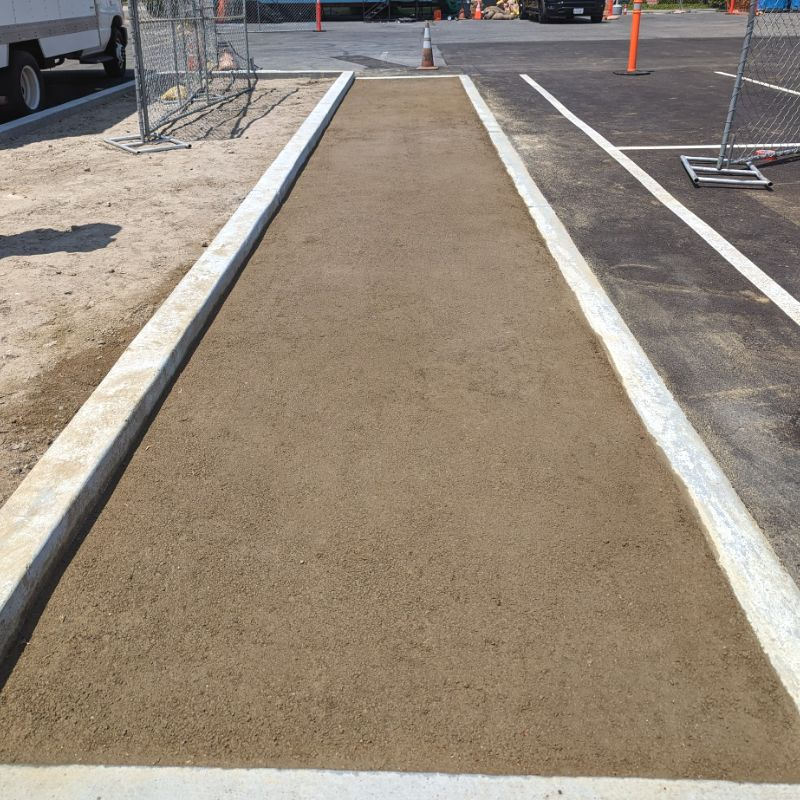
This month marks the third and final installment in our three-part series highlighting the key components of a GraniteCrete installation. This month, we focus on achieving proper curing after GraniteCrete has been installed. Proper curing is essential to achieving long-term strength and durability and ensuring a beautiful GraniteCrete surface for many years.
The curing process is what makes GraniteCrete achieve its strength and longevity, allowing a well-cured installation to remain beautiful for many years, even under heavy use. Slow curing of GraniteCrete is important to control cracking and ensure the surface gains maximum strength evenly throughout the curing process.
What Happens During Curing The curing process has both a physical and a chemical component, and each adds to proper curing and strength gain for the final cured product. At a physical level, moisture migrates inside the installed GraniteCrete, while overall moisture begins to dissipate to the air and into the subgrade. Compaction brings particles into close contact so that a continuous but thin skeleton forms at contact points, locking the GraniteCrete into a stiff, interlocked granular composite. Proper moisture level and compaction create the environment for an excellent curing process, but the final strength and longevity are built during curing.
As water is consumed by hydration of the particles and some is lost to evaporation, very small internal voids form. These are partly accommodated by the granular structure, so shrinkage cracking is usually less than in full-depth concrete, but microcracking still occurs and is part of the normal physical evolution. The net physical result is a stiff, drainable, bound aggregate system with enough cohesion for pedestrian and light-vehicle traffic when properly compacted.
Chemically, only a portion of the GraniteCrete grains hydrate in the first day or two; the rest react slowly as water diffuses in, which is why strength gain continues for weeks. Calcium hydroxide can slowly react with atmospheric CO₂ to form calcium carbonate, which contributes modestly to later-age stiffness and durability. Because of the lower moisture content than is typical for concrete, hydration is moisture-limited: local zones with adequate water hydrate well, while drier microzones hydrate more slowly until they pick up ambient moisture, then gradually contribute to strength.
Proper Curing Is About Moisture Achieving full strength and lasting beauty requires maintaining a steady moisture content during the curing process. Overmoisture or premature drying out of the installation will weaken it.Proper moisture management can be achieved by regularly misting the installation during the first few days after installation, or by covering the installation for several days to retain moisture. Be sure to protect the installation from excessive moisture.
During the first 48 hours, it is critical to prevent any uncontrolled heavy water exposure – including rain, irrigation systems, or sprinkler runoff – from contacting the surface. Maintaining some moisture content, however, is critical – moisture is essential to the curing process.If rain is forecast during the first 48 hours of the curing period, the surface should be covered with plastic to prevent rain from coming in direct contact with – or puddling on the surface of – the material. If temperatures fall below 50°F, the curing process should be extended by 5 days.
Curing Period and Protection Most of the strength gain happens in the first 7–14 days and is effectively complete for pathway use by about 28 days under typical conditions. Under proper conditions, after 7 days GraniteCrete achieves 65-80% of its full strength; after 14 days it reaches 85-90%, and is near 100% after 28 days.Freshly installed GraniteCrete should be protected from traffic and environmental exposure. While light foot traffic is allowed 24 hours after installation, it is best to stay off newly installed areas for at least 72 hours whenever possible. Vehicular traffic should be avoided for at least 14 days after installation to allow the surface to gain strength.
What to Expect During Cure Time Minor cracking may occur during the curing process. Over time, aggregate fines will naturally settle into these small cracks and help them blend into the surrounding surface. If additional repair is needed, refer to GraniteCrete’s Maintenance and Repair document.At the end of the curing period, the entire surface should be swept or blown clean to remove any loose surface materials. (A thin veneer of loose aggregate may be present after curing, which is normal.)
Proper curing is the final critical step in any GraniteCrete installation. When proper moisture content, compaction, and curing practices are followed together, the result is a durable, long-lasting surface built to perform for years to come.
This month marks the second installment in a three-part series highlighting key components of a GraniteCrete installation. This month, we highlight proper compaction during the installation process. Proper compaction is critical to creating a lasting, strong installation; without it, GraniteCrete will not reach its full strength, and the surface will degrade before its time.
How to Properly Compact GraniteCrete
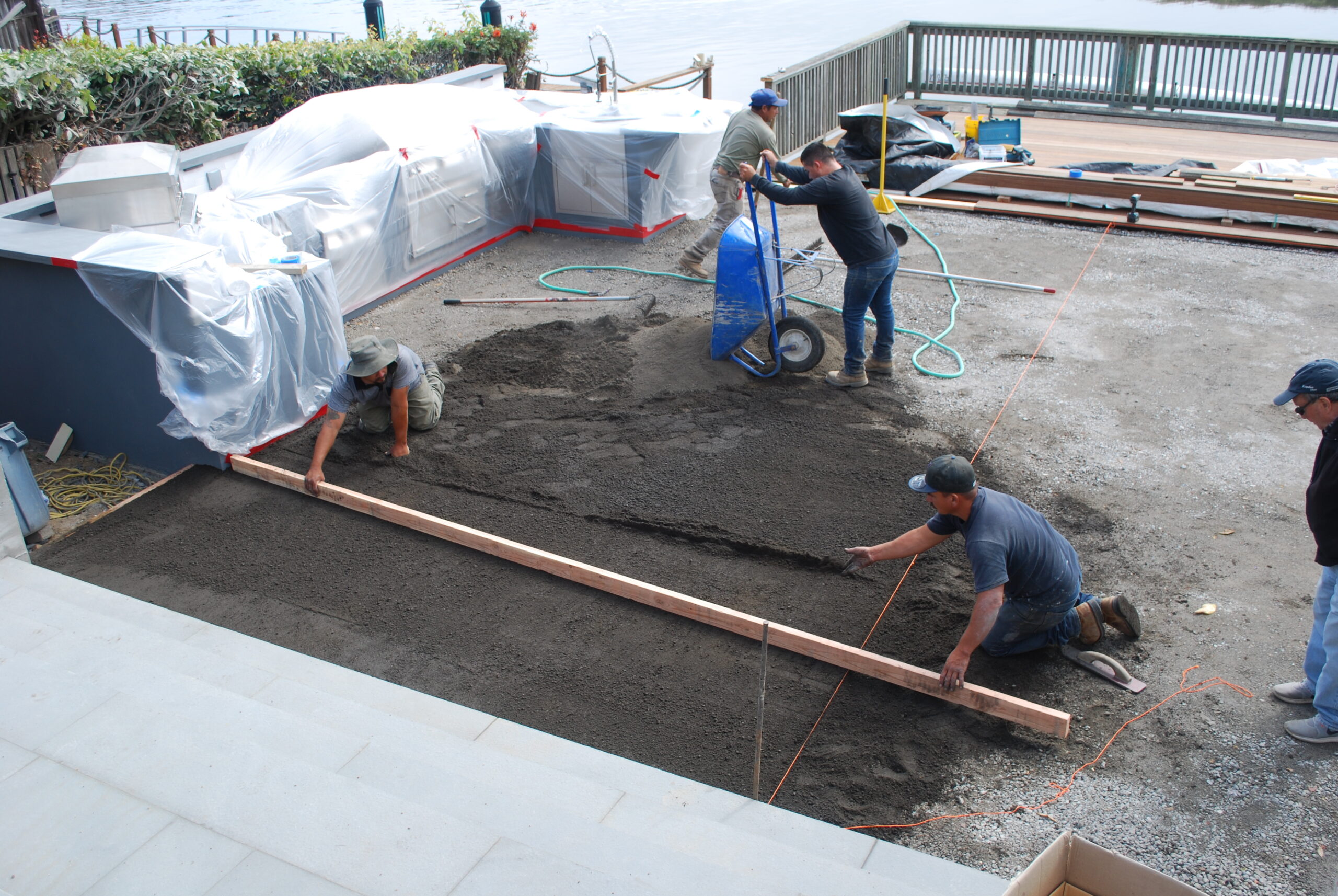
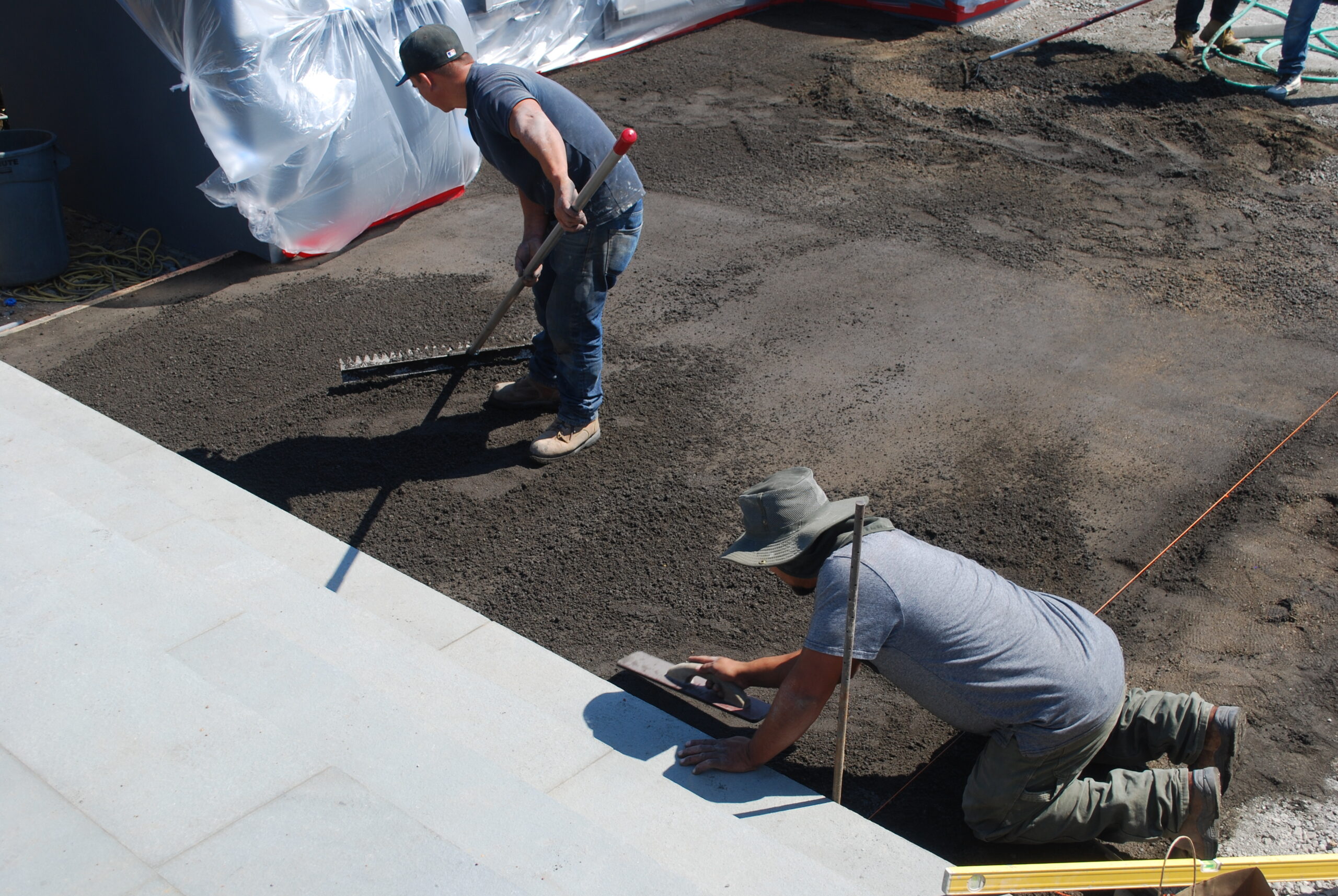
Before compaction begins, it’s important to set-up a good screeding process to ensure the material is level. Keep in mind that GraniteCrete compacts approximately 25%, so your screeding process should account for that. The finished grade should meet specifications, as additional GraniteCrete cannot be added on top of a compacted lift.
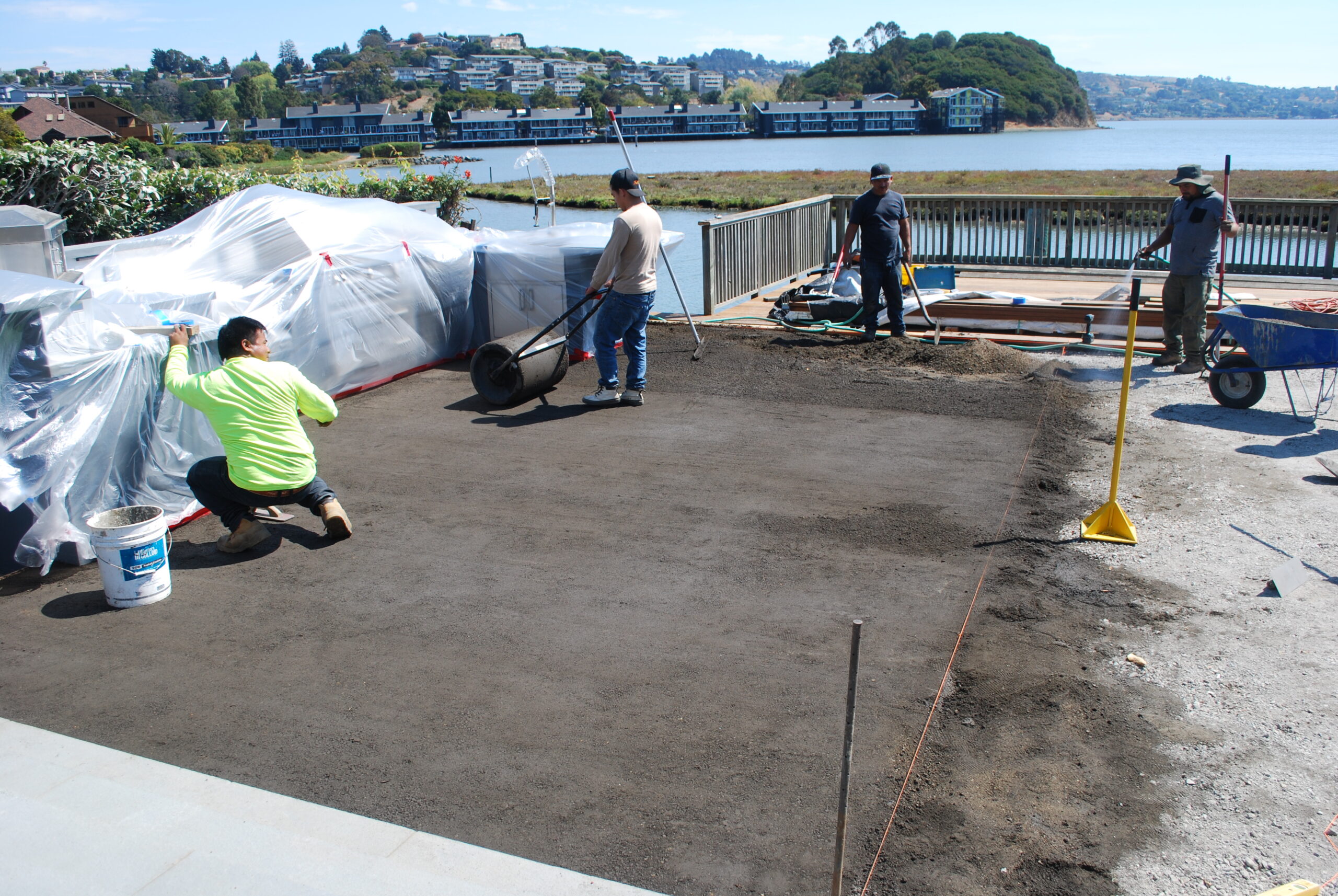
GraniteCrete should not be allowed to dry prior to compaction. Compaction should be completed using wooden or steel floats, hand tamps, and a 36” walk-behind or riding drum roller in static mode.
Once screeding is completed, start compacting the edges, corners, and any areas that the drum roller cannot reach, paying particular attention to grading while compacting. Hand tamping should be done around benches, sign posts, corners, boulders, and other obstacles using a 10” hand tamp.
Particular attention should be given to corners and edges to ensure tight compaction. A 6” wooden masonry float can be used in narrow spaces; it can also be used in a slapping/pounding motion to eliminate ridges, maintain consistent grading, and finish.
For larger areas, several passes can be made using a 36” walk-behind or drum roller in a static position. Installers should wear flat-soled work boots when using a roller to avoid marking the final finish.
If divots occur in the surface during compaction, they can be filled with fresh, loose material (with larger stones removed) and compacted using a wooden float to match the surrounding surface.
All tools — including hand tamps, floats, and rollers — should be kept clean throughout the process.
Once compaction is complete, it’s important to repair grading issues immediately, as the product will harden within minutes once it’s compacted.
Assessing Compaction
A consistent compaction rate of 88%–92% is required for all applications. A properly compacted surface will be firm, smooth, and free of loose or pebbled material. Non-compacted — or poorly compacted — GraniteCrete will result in a loose top layer and can compromise the overall quality of the installation. An easy way to see if proper compaction has been achieved is to press your thumb on the material; it should feel solid to the touch, with no movement. If there is any movement, continue compacting the material.
Proper compaction is the second critical step in any GraniteCrete installation. Next time, we’ll build on this foundation as we turn our focus to the next essential element: Curing.
This month marks the first installment in a three-part series highlighting the key components of a GraniteCrete installation. This month we will be looking at proper moisture content during the mixing and installation process.
Adding Water to the Dry Decomposed Granite & GraniteCrete Admixture
For installations up to 3,000 square feet, the water can be added and mixed into the decomposed granite and GraniteCrete admixture manually. We recommend using a hose with a shower head/spray attachment, and a rake to thoroughly mix it into the dry material.
A consistent moisture level can be accomplished more efficiently by using a volumetric truck. With separate areas/hoppers for decomposed granite, GraniteCrete admixture, and water, these trucks are able to mix the materials together at the job site — saving valuable time, and improving consistency. For installations over 3,000 square feet, the use of a volumetric truck is required.
Assessing Optimum Moisture Content
A simple field test makes it easy to determine whether the optimum moisture content has been achieved:
Squeeze a handful of GraniteCrete firmly in your fist, then open your hand. When the color has just started to transfer onto your hand and the mixture just begins to hold together in a clump, it’s ready for installation.
If water oozes out when squeezed, the mixture is too damp — this can result in “sticky” materials, and complicate proper compaction or the quality of the finished surface. If the material is too damp, it may be placed on the bottom of the installation, with material that has the proper moisture content on top.
Proper moisture content is the first critical step in any installation of GraniteCrete. Next month, we’ll build on that foundation as we turn our focus to the next essential element: Compaction.
As this year winds down and we turn our sights toward the next, we are grateful to everyone who chose to include us in their projects this past year. We appreciate your support, and look forward to continuing to work with you in the future. Before we gear up for the new year, we’d like to take a moment to share a few highlights from 2025:
GraniteCrete at GCSAA Conference in February (left) and at the ASLA annual Conference in October (right).
We attended several trade shows this year, including GCSAA conference, NorCal Landscape & Nursery Show, ASLA annual conference, and The Landscape Expo. We had a great time meeting everyone who stopped by our booth to learn more about GraniteCrete.
We produced our first “super sacks” at our manufacturing facility in southern California. These “super sacks” hold 2,000 pounds of material versus our standard 85 pound bag. If desiring these larger sacks for a project, reach out to us for pricing and further information!
We supported one of our retail partners, Southwest Boulder & Stone, as a new location was opened in southern California this past fall.
We began working with the Los Angeles Unified School District to bring GraniteCrete installations to several campuses across the district as part of a green initiative.
We look forward to what 2026 has in store for GraniteCrete!
The Los Angeles Unified School District (LAUSD) is working toward creating vibrant, sustainable schoolyards, guided by the Green Schoolyards for All Plan.
GraniteCrete pathway installation day at Fishburn Elementary School. GraniteCrete’s Carmel Coast color was used, nicely complementing the surrounding landscape.
This plan will see all campuses within LAUSD converting at least 30% of existing hard-surface schoolyard space into green space by 2035. These green spaces will use “natural elements and sustainable design” to provide students with access to nature, shade, and cooler play areas.
Beyond aesthetic improvements, these green spaces are designed to support student well-being. Research has shown that students with access to green spaces experience a range of benefits. These benefits include higher attendance rates, improved academic performance, and better physical and mental health.
Fishburn Elementary School is one of the first campuses to undergo this transformation. Plans for Fishburn called for the removal of existing asphalt, adding turf, and planting shrubs and trees. Plans also called for the addition of a permeable pathway, with GraniteCrete chosen to meet this requirement.Covering around 1,000 square feet, this installation marks the beginning of a promising partnership between GraniteCrete and LAUSD. GraniteCrete is proud to support this green initiative, and looks forward to contributing to future projects that enrich student experiences and advance sustainability across the District.
GraniteCrete is increasingly being used across California to transform the outdoor spaces of school campuses. GraniteCrete is an excellent choice for this, for five key reasons.
Clockwise from top-left: Santa Rosa Community College; Patterson High School; Markham Elementary School; Burlingame Intermediate School.
Accessibility Since GraniteCrete meets ADA accessibility standards, paving with GraniteCrete helps ensure that everyone can navigate school grounds safely and comfortably. It’s also incredibly durable — with the near-strength of concrete — and slip-resistant.
Reduced Temperatures GraniteCrete helps reduce the urban heat island effect, keeping campus temperatures more comfortable during the school year. This is especially important in areas that experience elevated temperatures.
Permeability As a permeable paving material, GraniteCrete allows rainwater to pass through its surface to the ground below. This reduces stormwater runoff and promotes groundwater recharge — a major plus for schools looking to implement sustainable landscaping practices and reduce the need of additional landscaping elements, such as bioswales.
LEED Credits The inclusion of GraniteCrete can contribute to earning points under certain LEED credits — aligning with many schools’ goals for greener, more sustainable operations.
Aesthetics Its natural appearance blends beautifully with a variety of school landscapes, offering a functional yet aesthetic upgrade. GraniteCrete paving on campuses across California signals a growing commitment to environmental stewardship, student safety, and strong school infrastructure. We are proud to be part of this progress.
Each year on April 22, we celebrate Earth Day. We have the opportunity to evaluate the impact our everyday choices have on the planet, and to look at where we can improve to better protect it for generations to follow.At GraniteCrete, we are proud to supply a product that benefits the environment in several ways. However, our commitment to sustainability and environmentally-friendly choices doesn’t end there.
The entire GraniteCrete team participates in composting of all qualifying food waste, as well as recycling of all approved items.
Other steps some of our team members take involve: Using all LED lightbulbs Making an effort to not buy any single-use items Purchasing as many items as possible in glass containers – which are then reused for pickling, food storage, et cetera – or, buying items in compostable packaging Using plant-based cleaners and/or biodegradable soaps Driving hybrid vehicles Deriving 100% of their home’s electricity from roof solar panels Opting to replace their lawn with native plants, permeable hardscape, and drip irrigation systems
As this year winds down and we turn our sights toward the next, we are grateful to everyone who chose to include us in their projects this past year. We appreciate your support, and look forward to continuing to work with you in the future. Before we gear up for the new year, we’d like to take a moment to share a few highlights from 2024:
We hired a dedicated, on-site field consultant, Marco Aguilar-Martinez, for Northern California. We are thrilled to have Marco on the GraniteCrete team!
We had several celebrity installations in the San Diego area, including Mount Helix, San Diego Safari Park, and Legoland!
We achieved record sales for the fifth year in a row, with particular expansion in Southern California!
We look forward to what 2025 has in store for GraniteCrete!
GraniteCrete was given the opportunity to be part of two meaningful installations:
The Ohana Center for Child and Adolescent Behavioral Health‘s outdoor spaces (above, left) were designed by BFS Landscape Architects. GraniteCrete pathways allow patients to connect with nature as they move throughout the campus to enjoy gardens, sunshine, and an amphitheater. Although only a small part of the campus, GraniteCrete is grateful and proud to support Ohana’s commitment to the mental well-being of Monterey County’s youth.
The restoration of an overlook adjacent to the Scenic Road Walkway (above, right). Carmel Cares proposed the restoration, and the 2024 class of Leadership Carmel took up the initiative, spending months crafting a plan to transform the overlook into an “accessible and inviting viewing patio.” GraniteCrete paving material was chosen to help provide a seamless transition from walkway to outlook, and to prevent the erosion issues that had previously plagued the outlook. We are delighted to have been chosen for this important project.
The importance of taking steps to reduce global temperatures is at the forefront of many people’s minds. Sustainable building practices are one way the rise in global temperatures can be combated, and the risk of harmful man-made situations—such as urban heat islands—can be reduced.
Image courtesy of Green Ribbon.
What is an Urban Heat Island?
An urban heat island occurs in cities when the natural landscape is replaced by pavement, buildings, and other surfaces that absorb and retain heat. As a result, the materials create a hotter environment than rural areas. Temperatures can range from one to three degrees hotter during the day, and from three to seven degrees hotter at night! This “heat island effect” leads to increased energy costs, air pollution levels, and heat-related illnesses.
These temperatures are influenced by the materials used, as each has an associated Solar Reflectance value.
What is a Solar Reflectance (SR) Value?
Also known as its albedo value, a material’s SR value is a way to measure its ability to stay cool by reflecting—rather than absorbing—solar heat. It’s measured on a scale from 0 to 1. The higher a material’s SR, the lower its contribution to the heat island effect.
What Are Other Ways to Reduce the Urban Heat Island Effect?
The Environmental Protection Agency recommends a few strategies for reducing the urban heat island effect. One strategy is using paving materials that tend to remain cooler than conventional pavements, such as permeable ones. Permeable paving materials are generally lighter in color, are able to absorb and filter water, and have open pores—all features that contribute toward a cooler paving material. Permeable paving materials are also an excellent solution because they are not a one-trick pony. They can also lower tire noise, provide better traction, and aid stormwater management.
There are a handful of permeable paving options available, including our personal favorite: GraniteCrete. GraniteCrete has long been a champion for the environment, and we are proud to offer a product that puts it—and sustainability—first.
We use cookies on our website to give you the most relevant experience by remembering your preferences and repeat visits. By clicking “Accept”, you consent to the use of ALL the cookies.
This website uses cookies to improve your experience while you navigate through the website. Out of these, the cookies that are categorized as necessary are stored on your browser as they are essential for the working of basic functionalities of the website. We also use third-party cookies that help us analyze and understand how you use this website. These cookies will be stored in your browser only with your consent. You also have the option to opt-out of these cookies. But opting out of some of these cookies may affect your browsing experience.
Necessary cookies are absolutely essential for the website to function properly. These cookies ensure basic functionalities and security features of the website, anonymously.
Cookie
Duration
Description
cookielawinfo-checkbox-analytics
11 months
This cookie is set by GDPR Cookie Consent plugin. The cookie is used to store the user consent for the cookies in the category "Analytics".
cookielawinfo-checkbox-functional
11 months
The cookie is set by GDPR cookie consent to record the user consent for the cookies in the category "Functional".
cookielawinfo-checkbox-necessary
11 months
This cookie is set by GDPR Cookie Consent plugin. The cookies is used to store the user consent for the cookies in the category "Necessary".
cookielawinfo-checkbox-others
11 months
This cookie is set by GDPR Cookie Consent plugin. The cookie is used to store the user consent for the cookies in the category "Other.
cookielawinfo-checkbox-performance
11 months
This cookie is set by GDPR Cookie Consent plugin. The cookie is used to store the user consent for the cookies in the category "Performance".
viewed_cookie_policy
11 months
The cookie is set by the GDPR Cookie Consent plugin and is used to store whether or not user has consented to the use of cookies. It does not store any personal data.
Functional cookies help to perform certain functionalities like sharing the content of the website on social media platforms, collect feedbacks, and other third-party features.
Performance cookies are used to understand and analyze the key performance indexes of the website which helps in delivering a better user experience for the visitors.
Analytical cookies are used to understand how visitors interact with the website. These cookies help provide information on metrics the number of visitors, bounce rate, traffic source, etc.
Advertisement cookies are used to provide visitors with relevant ads and marketing campaigns. These cookies track visitors across websites and collect information to provide customized ads.